 Dansk
Dansk


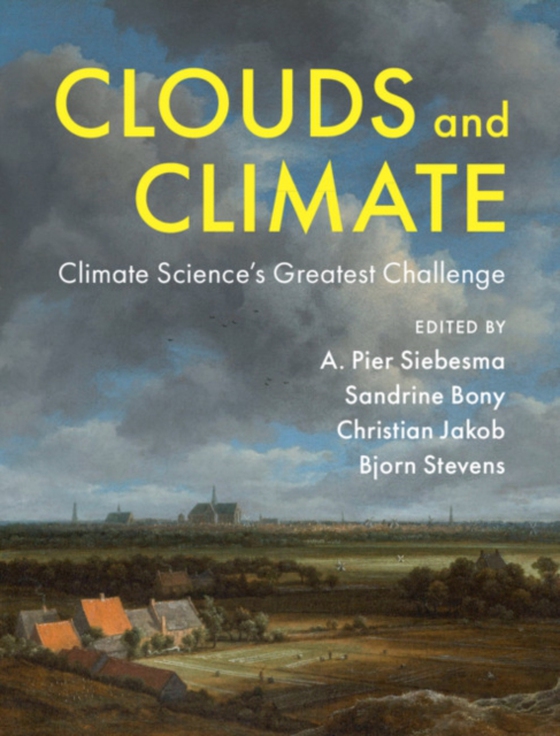
Clouds and Climate e-bog
820,11 DKK
(ekskl. moms 656,09 DKK)
Cloud research is a rapidly developing branch of climate science that's vital to climate modelling. With new observational and simulation technologies our knowledge of clouds and their role in the warming climate is accelerating. This book provides a comprehensive overview of research on clouds and their role in our present and future climate, covering theoretical, observational, and modelling pe…
Cloud research is a rapidly developing branch of climate science that's vital to climate modelling. With new observational and simulation technologies our knowledge of clouds and their role in the warming climate is accelerating. This book provides a comprehensive overview of research on clouds and their role in our present and future climate, covering theoretical, observational, and modelling perspectives. Part I discusses clouds from three different perspectives: as particles, light and fluid. Part II describes our capability to model clouds, ranging from theoretical conceptual models to applied parameterised representations. Part III describes the interaction of clouds with the large-scale circulation in the tropics, mid-latitudes, and polar regions. Part IV describes how clouds are perturbed by aerosols, the land-surface, and global warming. Each chapter contains end-of-chapter exercises and further reading sections, making this an ideal resource for advanced students and researchers in climatology, atmospheric science, meteorology, and climate change.
E-bog
820,11 DKK
Forlag
Cambridge University Press
Udgivet
02.09.2020
Genrer
KNGV
Sprog
English
Format
pdf
Beskyttelse
LCP
ISBN
9781108889537
Cloud research is a rapidly developing branch of climate science that's vital to climate modelling. With new observational and simulation technologies our knowledge of clouds and their role in the warming climate is accelerating. This book provides a comprehensive overview of research on clouds and their role in our present and future climate, covering theoretical, observational, and modelling perspectives. Part I discusses clouds from three different perspectives: as particles, light and fluid. Part II describes our capability to model clouds, ranging from theoretical conceptual models to applied parameterised representations. Part III describes the interaction of clouds with the large-scale circulation in the tropics, mid-latitudes, and polar regions. Part IV describes how clouds are perturbed by aerosols, the land-surface, and global warming. Each chapter contains end-of-chapter exercises and further reading sections, making this an ideal resource for advanced students and researchers in climatology, atmospheric science, meteorology, and climate change.