 Dansk
Dansk


Arajarvi, Noora
(redaktør)
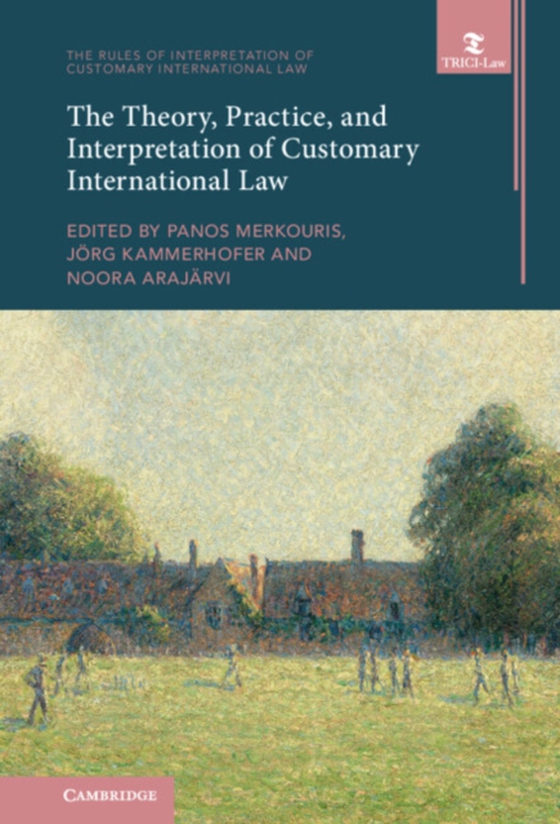
Theory, Practice, and Interpretation of Customary International Law e-bog
1167,65 DKK
Although customary international law (CIL) has been central to international law from its inception, it is often misunderstood. This edited volume remedies that problem by tracing the history of CIL and provides an in-depth study of its theory, practice, and interpretation. Its chapters tackle the big questions which surround this source of international law such as: what are the rules that regul…
Although customary international law (CIL) has been central to international law from its inception, it is often misunderstood. This edited volume remedies that problem by tracing the history of CIL and provides an in-depth study of its theory, practice, and interpretation. Its chapters tackle the big questions which surround this source of international law such as: what are the rules that regulate the functioning of CIL as a source of international law? Can CIL be interpreted? Where do lines between identification, interpretation, application, and modification of a rule of CIL lie? Using recent developments, this volume revisits old debates and resolves them by proffering new and innovative solutions. With detailed examples from international and national courts, it places CIL in a range of settings to explain, explore and reflect upon this developing and highly significant field. This title is also available as Open Access on Cambridge Core.
E-bog
1167,65 DKK
Forlag
Cambridge University Press
Udgivet
11.05.2022
Genrer
Public international law
Sprog
English
Format
pdf
Beskyttelse
LCP
ISBN
9781009036047
Although customary international law (CIL) has been central to international law from its inception, it is often misunderstood. This edited volume remedies that problem by tracing the history of CIL and provides an in-depth study of its theory, practice, and interpretation. Its chapters tackle the big questions which surround this source of international law such as: what are the rules that regulate the functioning of CIL as a source of international law? Can CIL be interpreted? Where do lines between identification, interpretation, application, and modification of a rule of CIL lie? Using recent developments, this volume revisits old debates and resolves them by proffering new and innovative solutions. With detailed examples from international and national courts, it places CIL in a range of settings to explain, explore and reflect upon this developing and highly significant field. This title is also available as Open Access on Cambridge Core.