 Dansk
Dansk


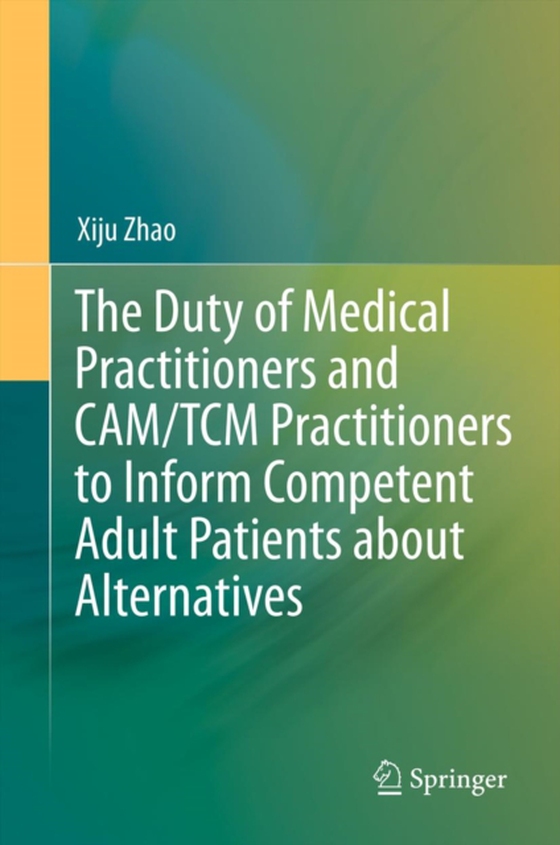
Zhao, Xiju
(forfatter)
Duty of Medical Practitioners and CAM/TCM Practitioners to Inform Competent Adult Patients about Alternatives e-bog
1240,73 DKK
The book pays interest to a small and almost untouched topic: a health practitioner' s duty to inform about alternatives. It covers both orthodox medicine practitioners and CAM practitioners. The topic is explored in a co mparative way, examining the laws of not only common law jurisdictions, such as the USA, England, Canada, Australia, New Zealand, but also two East Asia jurisdictions ( China an…
The book pays interest to a small and almost untouched topic: a health practitioner' s duty to inform about alternatives. It covers both orthodox medicine practitioners and CAM practitioners. The topic is explored in a co mparative way, examining the laws of not only common law jurisdictions, such as the USA, England, Canada, Australia, New Zealand, but also two East Asia jurisdictions ( China and Japan ) . It uses the collective wisdom of several common law jurisdictions, but also differentiates them. It places the issue of "e;disclosure of alternatives"e; in a clear and wider context, making a cogent distinction between diagnosis/treatment and information disclosure.
E-bog
1240,73 DKK
Forlag
Springer
Udgivet
18.12.2013
Genrer
Medical and healthcare law
Sprog
English
Format
pdf
Beskyttelse
LCP
ISBN
9783642316470
The book pays interest to a small and almost untouched topic: a health practitioner' s duty to inform about alternatives. It covers both orthodox medicine practitioners and CAM practitioners. The topic is explored in a co mparative way, examining the laws of not only common law jurisdictions, such as the USA, England, Canada, Australia, New Zealand, but also two East Asia jurisdictions ( China and Japan ) . It uses the collective wisdom of several common law jurisdictions, but also differentiates them. It places the issue of "e;disclosure of alternatives"e; in a clear and wider context, making a cogent distinction between diagnosis/treatment and information disclosure.