 Dansk
Dansk


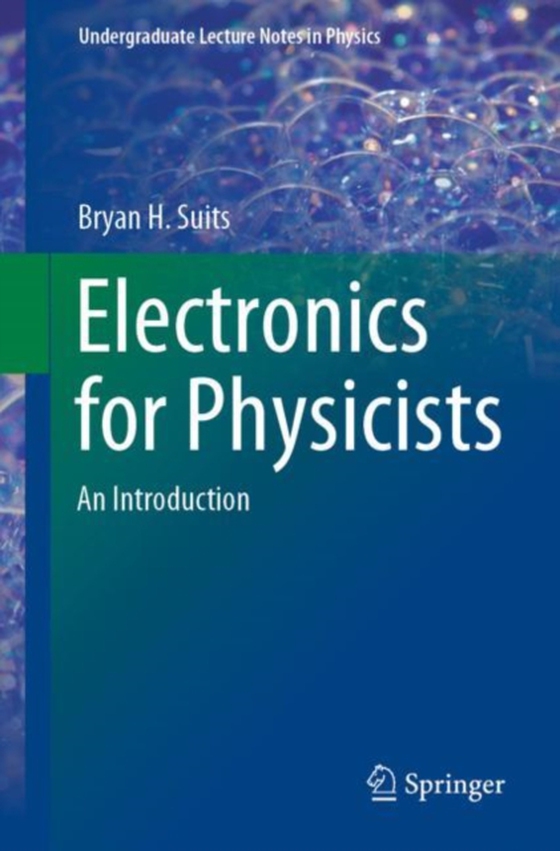
Suits, Bryan H.
(forfatter)
Electronics for Physicists e-bog
509,93 DKK
This book provides undergraduate physics majors and students of related sciences with a sound basic understanding of electronics and how it is used, principally in the physical sciences. While today few science students go on to careers that demand an ability to design and build electronic circuits, many will use and rely on electronics. As scientists, they will require an appropriate level of fu…
This book provides undergraduate physics majors and students of related sciences with a sound basic understanding of electronics and how it is used, principally in the physical sciences. While today few science students go on to careers that demand an ability to design and build electronic circuits, many will use and rely on electronics. As scientists, they will require an appropriate level of fundamental knowledge that enables them, for example, to understand what electronic equipment is doing, to correctly interpret the measurements obtained, and to appreciate the numerous links between electronics and how it is practiced, and other areas of science. Discussing electronics in the broader context and from the point of view of the scientist, this book is intended for students who are not planning to become electronics specialists. It has been written in a relatively informal, personal style and includes detailed examples, as well as some "e;outside the box"e; material to inspire thought and creativity. A selection of relevant exercises is included at the end of each chapter.
E-bog
509,93 DKK
Forlag
Springer
Udgivet
23.03.2020
Genrer
PDD
Sprog
English
Format
pdf
Beskyttelse
LCP
ISBN
9783030390884
This book provides undergraduate physics majors and students of related sciences with a sound basic understanding of electronics and how it is used, principally in the physical sciences. While today few science students go on to careers that demand an ability to design and build electronic circuits, many will use and rely on electronics. As scientists, they will require an appropriate level of fundamental knowledge that enables them, for example, to understand what electronic equipment is doing, to correctly interpret the measurements obtained, and to appreciate the numerous links between electronics and how it is practiced, and other areas of science. Discussing electronics in the broader context and from the point of view of the scientist, this book is intended for students who are not planning to become electronics specialists. It has been written in a relatively informal, personal style and includes detailed examples, as well as some "e;outside the box"e; material to inspire thought and creativity. A selection of relevant exercises is included at the end of each chapter.