 Dansk
Dansk


Matros, Y.S.
(forfatter)
Catalytic Processes Under Unsteady-State Conditions e-bog
473,39 DKK
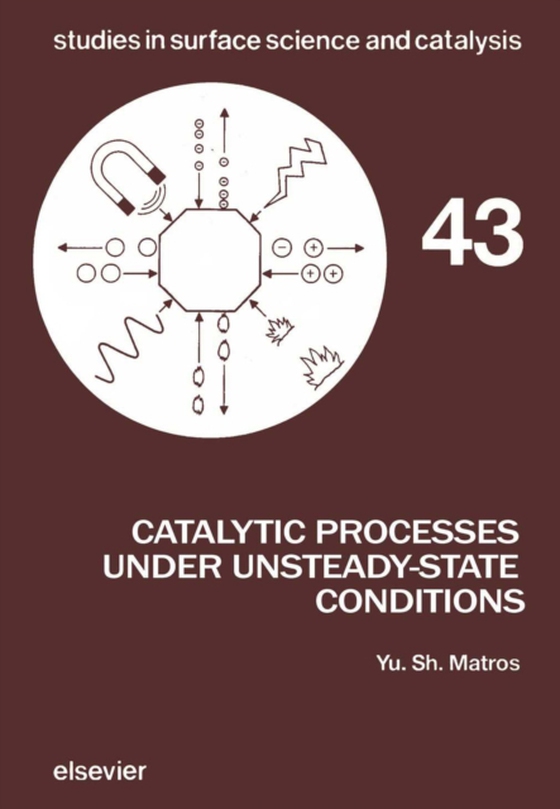
This book deals with catalytic processes under forced non-steady-state conditions. It demonstrates, both theoretically and practically, that forced non-steady-state processes are highly efficient compared with steady-state processes, and illustrates this with a wealth of practical examples.The first part of the book describes the theoretical and experimental basis of efficient processes, mathemat…
This book deals with catalytic processes under forced non-steady-state conditions. It demonstrates, both theoretically and practically, that forced non-steady-state processes are highly efficient compared with steady-state processes, and illustrates this with a wealth of practical examples.The first part of the book describes the theoretical and experimental basis of efficient processes, mathematical models of non-steady-state processes in reactors, influence of a non-steady-state catalyst surface, problems of optimization, the theory of a heat front in the fixed catalyst bed, and methods to create efficient cyclic regimes. The second part considers the following processes: sulphur dioxide oxidation in sulphuric acid production, cleaning of effluent gases from toxic impurities, production of high-potency heat, ammonia and methanol synthesis etc.The book will appeal to many readers: chemical engineers (especially in the field of mathematical modelling of reactors with a fixed catalyst bed); personnel of chemical plants and machine-manufacturing companies dealing with maintenance and installation of catalytic reactors; specialists in detoxification of the effluents from organic admixtures and carbon monoxide; students of technical colleges and universities
E-bog
473,39 DKK
Forlag
Elsevier Science
Udgivet
01.12.1988
Længde
402 sider
Genrer
PNRC
Sprog
English
Format
pdf
Beskyttelse
LCP
ISBN
9780080960760
This book deals with catalytic processes under forced non-steady-state conditions. It demonstrates, both theoretically and practically, that forced non-steady-state processes are highly efficient compared with steady-state processes, and illustrates this with a wealth of practical examples.The first part of the book describes the theoretical and experimental basis of efficient processes, mathematical models of non-steady-state processes in reactors, influence of a non-steady-state catalyst surface, problems of optimization, the theory of a heat front in the fixed catalyst bed, and methods to create efficient cyclic regimes. The second part considers the following processes: sulphur dioxide oxidation in sulphuric acid production, cleaning of effluent gases from toxic impurities, production of high-potency heat, ammonia and methanol synthesis etc.The book will appeal to many readers: chemical engineers (especially in the field of mathematical modelling of reactors with a fixed catalyst bed); personnel of chemical plants and machine-manufacturing companies dealing with maintenance and installation of catalytic reactors; specialists in detoxification of the effluents from organic admixtures and carbon monoxide; students of technical colleges and universities