 Dansk
Dansk


Kumar, Nitish
(redaktør)
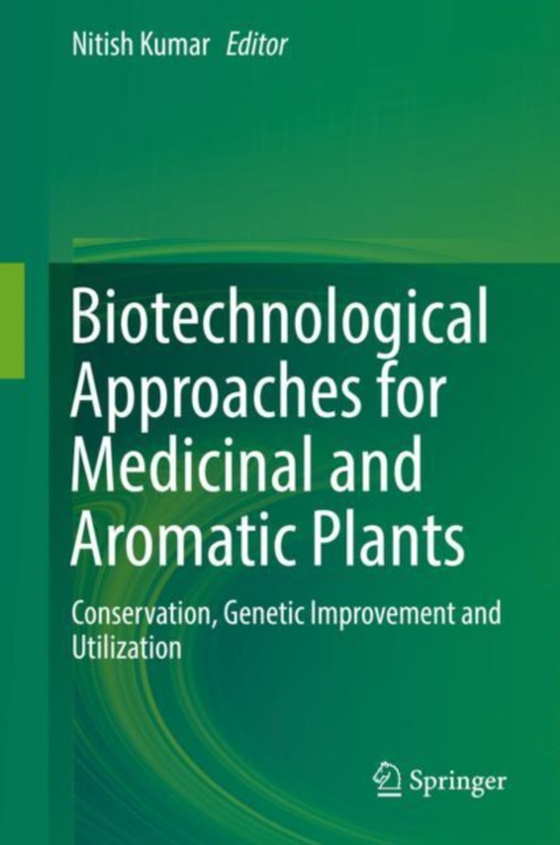
Biotechnological Approaches for Medicinal and Aromatic Plants e-bog
1313,81 DKK
For the majority of the world's population, medicinal and aromatic plants are the most important source of life-saving drugs. Biotechnological tools represent important resources for selecting, multiplying and conserving the critical genotypes of medicinal plants. In this regard, in-vitro regeneration holds tremendous potential for the production of high-quality plant-based medicines, while cryop…
For the majority of the world's population, medicinal and aromatic plants are the most important source of life-saving drugs. Biotechnological tools represent important resources for selecting, multiplying and conserving the critical genotypes of medicinal plants. In this regard, in-vitro regeneration holds tremendous potential for the production of high-quality plant-based medicines, while cryopreservation - a long-term conservation method using liquid nitrogen - provides an opportunity to conserve endangered medicinal and aromatic plants. In-vitro production of secondary metabolites in plant cell suspension cultures has been reported for various medicinal plants, and bioreactors represent a key step toward the commercial production of secondary metabolites by means of plant biotechnology.Addressing these key aspects, the book contains 29 chapters, divided into three sections.Section 1: In-vitro production of secondary metabolitesSection 2: In-vitro propagation, genetic transformation and germplasm conservationSection 3: Conventional and molecular approaches
E-bog
1313,81 DKK
Forlag
Springer
Udgivet
11.09.2018
Genrer
Genetics (non-medical)
Sprog
English
Format
pdf
Beskyttelse
LCP
ISBN
9789811305351
For the majority of the world's population, medicinal and aromatic plants are the most important source of life-saving drugs. Biotechnological tools represent important resources for selecting, multiplying and conserving the critical genotypes of medicinal plants. In this regard, in-vitro regeneration holds tremendous potential for the production of high-quality plant-based medicines, while cryopreservation - a long-term conservation method using liquid nitrogen - provides an opportunity to conserve endangered medicinal and aromatic plants. In-vitro production of secondary metabolites in plant cell suspension cultures has been reported for various medicinal plants, and bioreactors represent a key step toward the commercial production of secondary metabolites by means of plant biotechnology.Addressing these key aspects, the book contains 29 chapters, divided into three sections.Section 1: In-vitro production of secondary metabolitesSection 2: In-vitro propagation, genetic transformation and germplasm conservationSection 3: Conventional and molecular approaches