 Dansk
Dansk


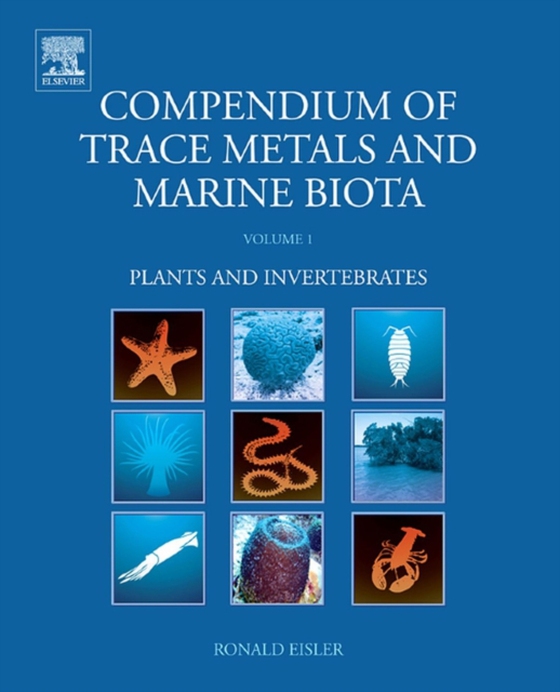
Eisler, Ronald
(forfatter)
Compendium of Trace Metals and Marine Biota e-bog
2190,77 DKK
Each book has two main goals1. Determine baseline concentrations of metals and metalloids in tissues of representative field populations of estuarine coastal, and open ocean organisms (Book 1:algae and macrophytes, protists, sponges, coelenterates, molluscs, crustaceans, insects, chaetognaths, annelids, echinoderms, and tunicates) (Book 2: elasmobranchs, fishes, reptiles, birds, mammals) and thei…
Each book has two main goals1. Determine baseline concentrations of metals and metalloids in tissues of representative field populations of estuarine coastal, and open ocean organisms (Book 1:algae and macrophytes, protists, sponges, coelenterates, molluscs, crustaceans, insects, chaetognaths, annelids, echinoderms, and tunicates) (Book 2: elasmobranchs, fishes, reptiles, birds, mammals) and their significance to organism health and to the health of their consumers.2. Synthesize existing information on biological, chemical, and physical factors known to modify uptake, retention, and translocation of each element under field and laboratory conditions. Recognition of the importance of these modifiers and their accompanying interactions is essential to the understanding of metals kinetics in marine systems and to the interpretation of baseline residue data. Synthesizes existing information on biological, chemical, and physical factors known to modify uptake, retention, and translocation of each element Aids understanding of metals kinetics in marine systems Allows the interpretation of baseline residue data
E-bog
2190,77 DKK
Forlag
Elsevier Science
Udgivet
14.12.2009
Længde
638 sider
Genrer
PSB
Sprog
English
Format
epub
Beskyttelse
LCP
ISBN
9780080963525
Each book has two main goals1. Determine baseline concentrations of metals and metalloids in tissues of representative field populations of estuarine coastal, and open ocean organisms (Book 1:algae and macrophytes, protists, sponges, coelenterates, molluscs, crustaceans, insects, chaetognaths, annelids, echinoderms, and tunicates) (Book 2: elasmobranchs, fishes, reptiles, birds, mammals) and their significance to organism health and to the health of their consumers.2. Synthesize existing information on biological, chemical, and physical factors known to modify uptake, retention, and translocation of each element under field and laboratory conditions. Recognition of the importance of these modifiers and their accompanying interactions is essential to the understanding of metals kinetics in marine systems and to the interpretation of baseline residue data. Synthesizes existing information on biological, chemical, and physical factors known to modify uptake, retention, and translocation of each element Aids understanding of metals kinetics in marine systems Allows the interpretation of baseline residue data