 Dansk
Dansk


Horn, Michael A. Van
(forfatter)
Within My Heart e-bog
273,24 DKK
This book illustrates how Christianity in the modern era has been shaped in the direction of subjectivity. In the Enlightenment, after Locke required faith to submit to reason's judgment, Kant argued that religion should remain within the bounds of reason only. Schleiermacher shifted attention away from belief to devotion to Christ and a feeling of absolute dependence on God. Rejecting Hegel's sy…
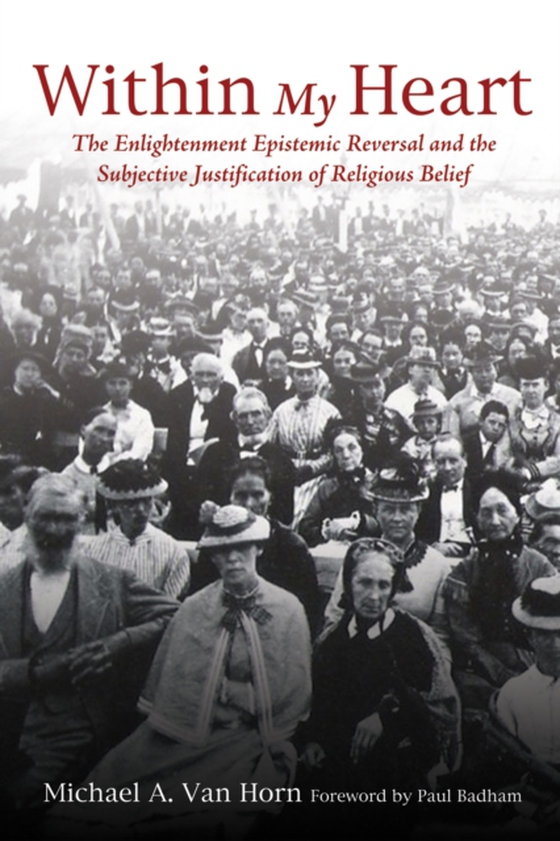
This book illustrates how Christianity in the modern era has been shaped in the direction of subjectivity. In the Enlightenment, after Locke required faith to submit to reason's judgment, Kant argued that religion should remain within the bounds of reason only. Schleiermacher shifted attention away from belief to devotion to Christ and a feeling of absolute dependence on God. Rejecting Hegel's system, Kierkegaard summoned his readers to a unique subjective approach to justification by faith. Revivalist Evangelicalism has been perceived, and portrayed itself, as a rejection of modernism. This study argues instead that the Evangelical-revivalist movement is unmistakably modern in its assumptions regarding the nature of faith. The Pietist impulse, fueled in part by modern anthropocentrism and subjectivism in religious belief, was appropriated by the Evangelical revivalists, such as John Wesley, George Whitefield, Jonathan Edwards, and, later, Charles Finney. In short, Christianity today is a religion of the heart.
E-bog
273,24 DKK
Forlag
Pickwick Publications
Udgivet
14.03.2017
Længde
220 sider
Genrer
Christian Churches, denominations, groups
Sprog
English
Format
pdf
Beskyttelse
LCP
ISBN
9781532613722
This book illustrates how Christianity in the modern era has been shaped in the direction of subjectivity. In the Enlightenment, after Locke required faith to submit to reason's judgment, Kant argued that religion should remain within the bounds of reason only. Schleiermacher shifted attention away from belief to devotion to Christ and a feeling of absolute dependence on God. Rejecting Hegel's system, Kierkegaard summoned his readers to a unique subjective approach to justification by faith. Revivalist Evangelicalism has been perceived, and portrayed itself, as a rejection of modernism. This study argues instead that the Evangelical-revivalist movement is unmistakably modern in its assumptions regarding the nature of faith. The Pietist impulse, fueled in part by modern anthropocentrism and subjectivism in religious belief, was appropriated by the Evangelical revivalists, such as John Wesley, George Whitefield, Jonathan Edwards, and, later, Charles Finney. In short, Christianity today is a religion of the heart.