 Dansk
Dansk


Frohlich, Jochen
(redaktør)
Direct and Large-Eddy Simulation VII e-bog
2921,57 DKK
After Surrey in 1994, Grenoble in 1996, Cambridge in 1999, Enschede in 2001, Munich in 2003 and Poiters in 2005, the 7th Workshop, DLES7, will be held in Trieste, again under the auspices of ERCOFTAC. Following the spirit of the series, the goal of this latest workshop is to establish a state-of-the-art of DNS and LES techniques for the computation and modeling of transitional/turbulent flows cov…
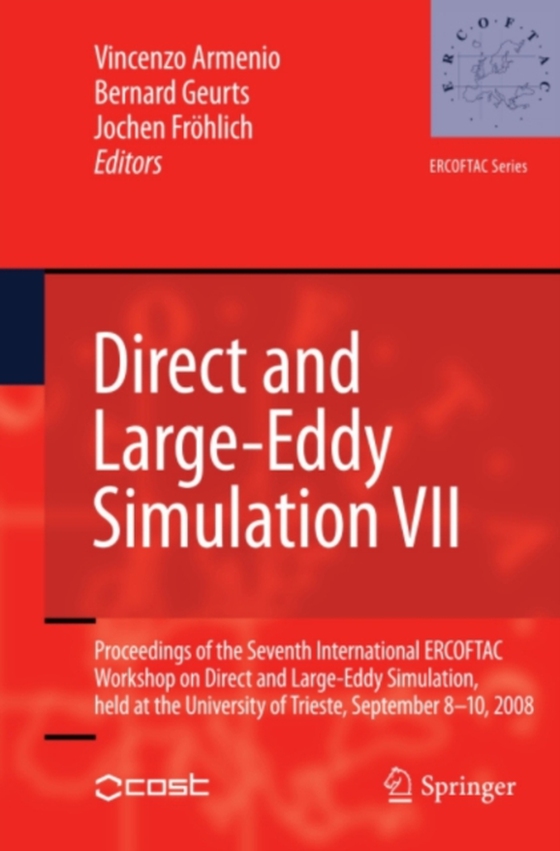
After Surrey in 1994, Grenoble in 1996, Cambridge in 1999, Enschede in 2001, Munich in 2003 and Poiters in 2005, the 7th Workshop, DLES7, will be held in Trieste, again under the auspices of ERCOFTAC. Following the spirit of the series, the goal of this latest workshop is to establish a state-of-the-art of DNS and LES techniques for the computation and modeling of transitional/turbulent flows covering a broad scope of topics such as aerodynamics, acoustics, combustion, multiphase flows, environment, geophysics and bio-medical applications. This gathering of specialists in the field should once again be a unique opportunity for discussions about the more recent advances in the prediction, understanding and control of turbulent flows in academic or industrial situations.
E-bog
2921,57 DKK
Forlag
Springer
Udgivet
28.04.2010
Genrer
TGMF
Sprog
English
Format
pdf
Beskyttelse
LCP
ISBN
9789048136520
After Surrey in 1994, Grenoble in 1996, Cambridge in 1999, Enschede in 2001, Munich in 2003 and Poiters in 2005, the 7th Workshop, DLES7, will be held in Trieste, again under the auspices of ERCOFTAC. Following the spirit of the series, the goal of this latest workshop is to establish a state-of-the-art of DNS and LES techniques for the computation and modeling of transitional/turbulent flows covering a broad scope of topics such as aerodynamics, acoustics, combustion, multiphase flows, environment, geophysics and bio-medical applications. This gathering of specialists in the field should once again be a unique opportunity for discussions about the more recent advances in the prediction, understanding and control of turbulent flows in academic or industrial situations.