 Dansk
Dansk


Wirth, Fabian
(forfatter)
Electric and Plug-in Hybrid Vehicle Networks e-bog
436,85 DKK
This book explores the behavior of networks of electric and hybrid vehicles. The topics that are covered include: energy management issues for aggregates of plug-in vehicles; the design of sharing systems to support electro-mobility; context awareness in the operation of electric and hybrid vehicles, and the role that this plays in a Smart City context; and tools to test and design massively larg…
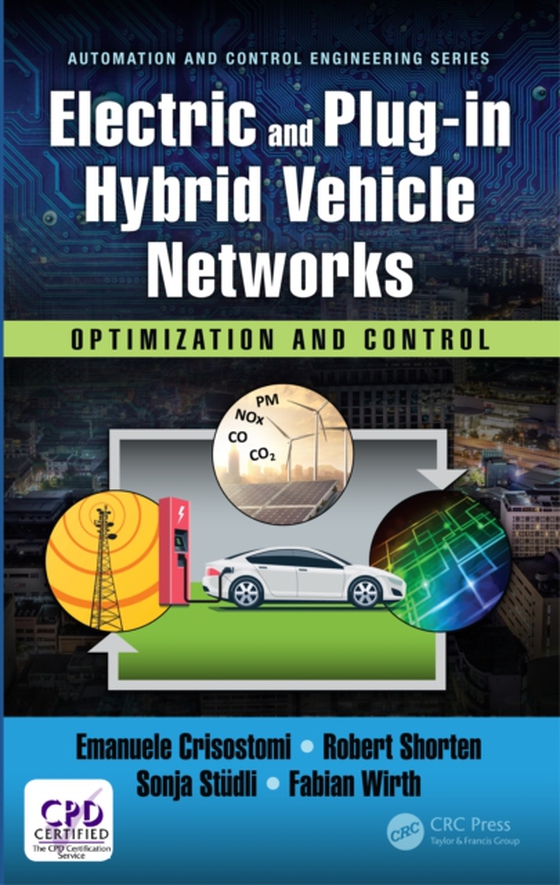
This book explores the behavior of networks of electric and hybrid vehicles. The topics that are covered include: energy management issues for aggregates of plug-in vehicles; the design of sharing systems to support electro-mobility; context awareness in the operation of electric and hybrid vehicles, and the role that this plays in a Smart City context; and tools to test and design massively large-scale networks of such vehicles. The book also introduces new and interesting control problems that are becoming prevalent in the EV-PHEV's context, as well as identifying some open questions. A particular focus of the book is on the opportunities afforded by networked actuation possibilities in electric and hybrid vehicles, and the role that such actuation may play in air-quality and emissions management.
E-bog
436,85 DKK
Forlag
CRC Press
Udgivet
30.10.2017
Længde
242 sider
Genrer
THR
Sprog
English
Format
epub
Beskyttelse
LCP
ISBN
9781351647915
This book explores the behavior of networks of electric and hybrid vehicles. The topics that are covered include: energy management issues for aggregates of plug-in vehicles; the design of sharing systems to support electro-mobility; context awareness in the operation of electric and hybrid vehicles, and the role that this plays in a Smart City context; and tools to test and design massively large-scale networks of such vehicles. The book also introduces new and interesting control problems that are becoming prevalent in the EV-PHEV's context, as well as identifying some open questions. A particular focus of the book is on the opportunities afforded by networked actuation possibilities in electric and hybrid vehicles, and the role that such actuation may play in air-quality and emissions management.