 Dansk
Dansk


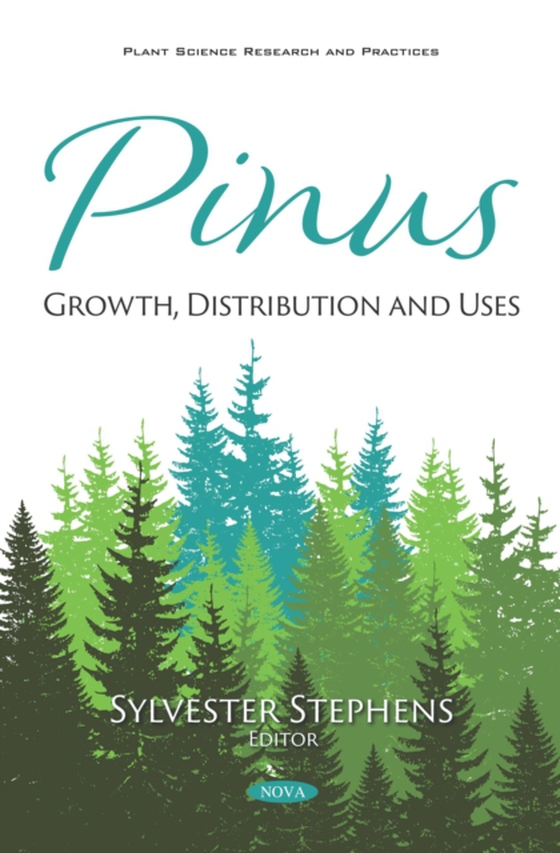
Sylvester Stephens
(redaktør)
Pinus: Growth, Distribution and Uses e-bog
802,25 DKK
In Pinus: Growth, Distribution and Uses, analyses of the current state of Scots pine (Pinus sylvestris L.) and the distribution of pine forests was carried out in three zones of East European plain: a taiga, a temperate broadleaf and mixed forest, and a temperate steppe. A study is included which focuses on somatic embryogenesis in Yakutanegoyou, Pinus armandii Franch. var. amamiana (Koidz.) Hatu…
In Pinus: Growth, Distribution and Uses, analyses of the current state of Scots pine (Pinus sylvestris L.) and the distribution of pine forests was carried out in three zones of East European plain: a taiga, a temperate broadleaf and mixed forest, and a temperate steppe. A study is included which focuses on somatic embryogenesis in Yakutanegoyou, Pinus armandii Franch. var. amamiana (Koidz.) Hatusima, an endemic and endangered species in Japan, which was initiated from megagametophytes containing zygotic embryos on a medium supplemented with 2,4-dichlorophenoxyacetic acid and 6-benzylaminopurine. Lastly, the authors gather and present information about pinus cultivation, as well the potential use of pinus bark as an adsorbent to remove Cd2+, Pb2+ and Cr3+ from contaminated water.
E-bog
802,25 DKK
Forlag
Nova
Udgivet
02.10.2019
Længde
120 sider
Genrer
TVR
Sprog
English
Format
pdf
Beskyttelse
LCP
ISBN
9781536164435
In Pinus: Growth, Distribution and Uses, analyses of the current state of Scots pine (Pinus sylvestris L.) and the distribution of pine forests was carried out in three zones of East European plain: a taiga, a temperate broadleaf and mixed forest, and a temperate steppe. A study is included which focuses on somatic embryogenesis in Yakutanegoyou, Pinus armandii Franch. var. amamiana (Koidz.) Hatusima, an endemic and endangered species in Japan, which was initiated from megagametophytes containing zygotic embryos on a medium supplemented with 2,4-dichlorophenoxyacetic acid and 6-benzylaminopurine. Lastly, the authors gather and present information about pinus cultivation, as well the potential use of pinus bark as an adsorbent to remove Cd2+, Pb2+ and Cr3+ from contaminated water.