 Dansk
Dansk
Okasaki, Chris
(forfatter)
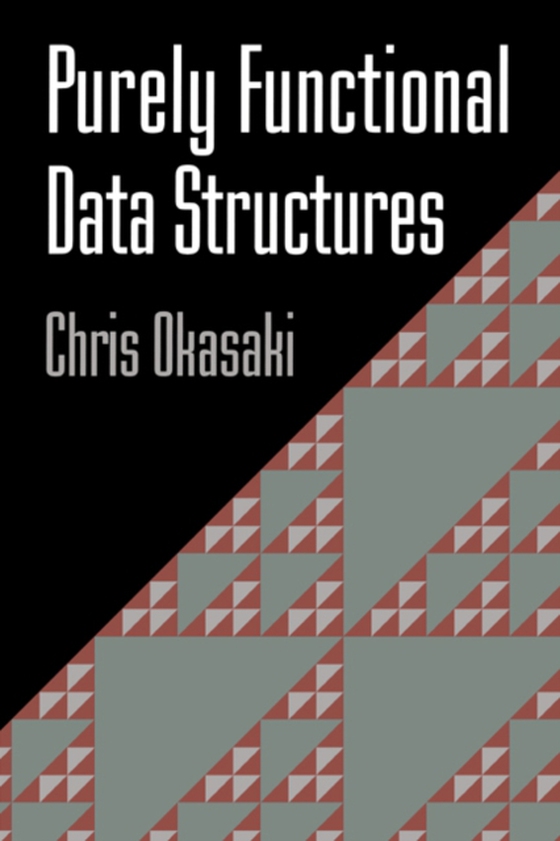
Purely Functional Data Structures e-bog
403,64 DKK
Most books on data structures assume an imperative language like C or C++. However, data structures for these languages do not always translate well to functional languages such as Standard ML, Haskell, or Scheme. This book describes data structures from the point of view of functional languages, with examples, and presents design techniques so that programmers can develop their own functional da…
Most books on data structures assume an imperative language like C or C++. However, data structures for these languages do not always translate well to functional languages such as Standard ML, Haskell, or Scheme. This book describes data structures from the point of view of functional languages, with examples, and presents design techniques so that programmers can develop their own functional data structures. It includes both classical data structures, such as red-black trees and binomial queues, and a host of new data structures developed exclusively for functional languages. All source code is given in Standard ML and Haskell, and most of the programs can easily be adapted to other functional languages. This handy reference for professional programmers working with functional languages can also be used as a tutorial or for self-study.
E-bog
403,64 DKK
Forlag
Cambridge University Press
Udgivet
04.03.2011
Genrer
UMB
Sprog
English
Format
pdf
Beskyttelse
LCP
ISBN
9780511825132
Most books on data structures assume an imperative language like C or C++. However, data structures for these languages do not always translate well to functional languages such as Standard ML, Haskell, or Scheme. This book describes data structures from the point of view of functional languages, with examples, and presents design techniques so that programmers can develop their own functional data structures. It includes both classical data structures, such as red-black trees and binomial queues, and a host of new data structures developed exclusively for functional languages. All source code is given in Standard ML and Haskell, and most of the programs can easily be adapted to other functional languages. This handy reference for professional programmers working with functional languages can also be used as a tutorial or for self-study.